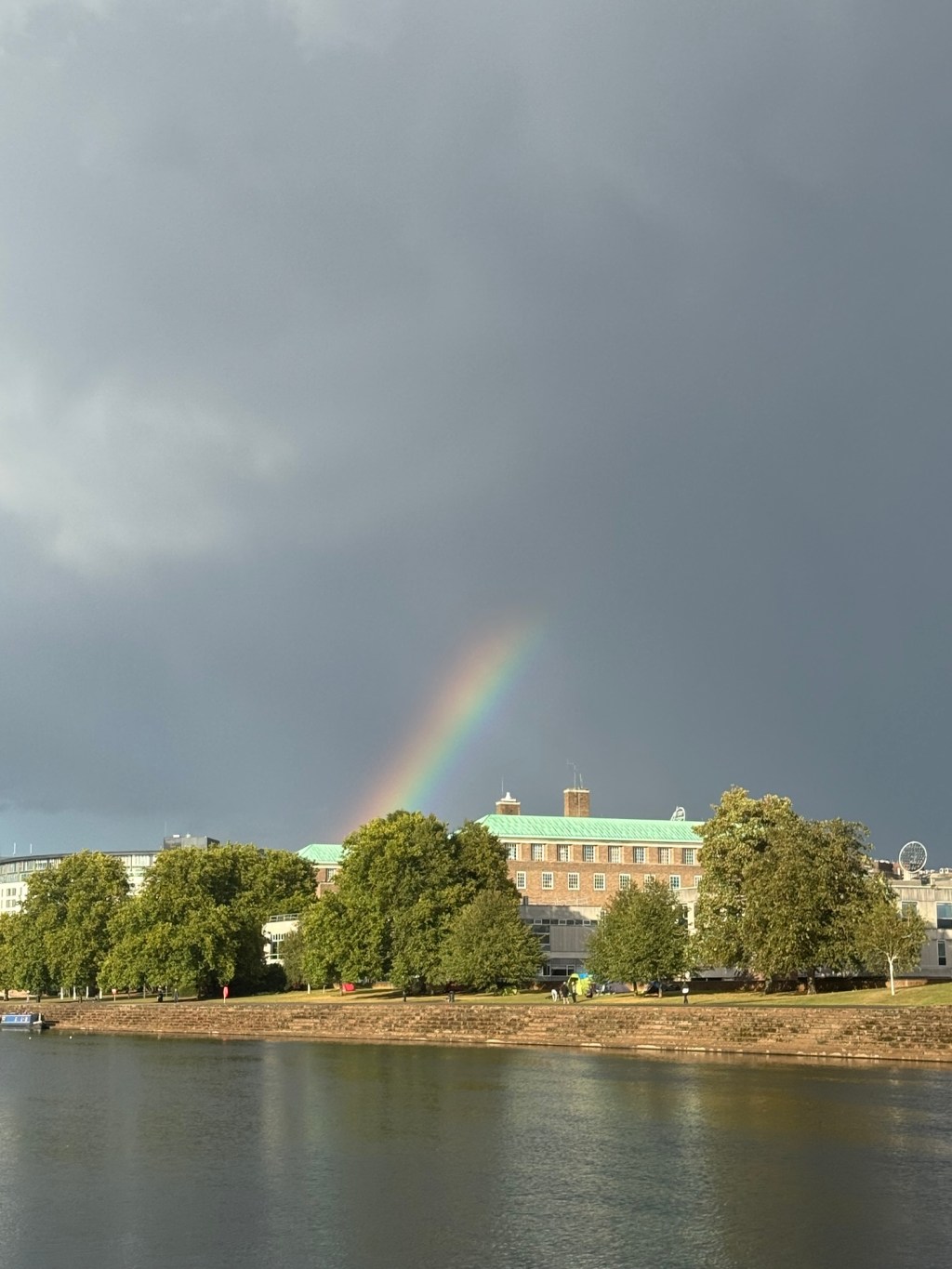
And yesterday I quietly reached it almost without noticing.
The realisation that I had achieved what I set out to do was stunning. It as unbelievable. Yet it felt so right.
It made me realise three things:
I can finally trust myself.
I am enough, exactly as I am.
It’s ok to choose myself.
The thing that I achieved yesterday is nowhere near finished yet. But that’s ok, I truly have come so far.
You see, it’s not about perfection. I always thought that I had to be perfect to succeed. I’m slowly realising this isn’t true. Success can be measured in many different ways.
I have been showing up on here with too much pressure to have the perfect blog post, with perfect structure and perfect grammar.
That changes now.
From now on I am going to show up on here every day just as I am, with no editing and no perfectionism and no pressure. Just me writing whatever comes to the page as it leaves my mind, because that will be what I truly have to say in that moment, unfiltered and raw.
That will be the real me.
This is for me.
This is who I am.
Goal achieved
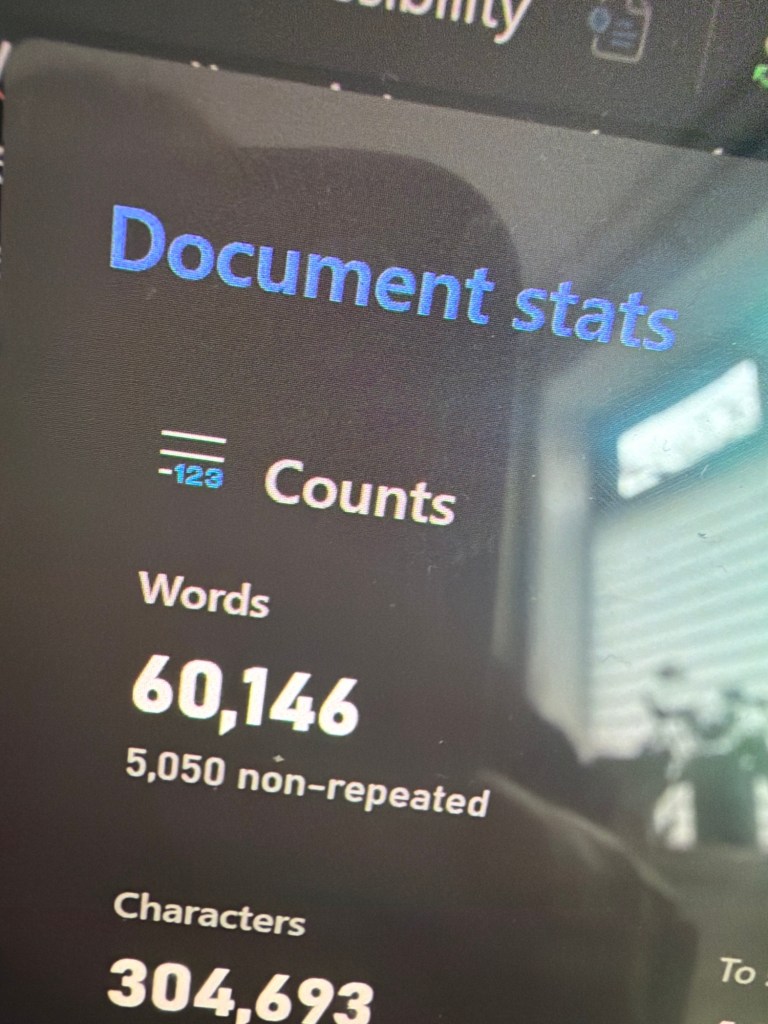
The goal was to write a 60,000 word memoir. I promised myself for years that someday I would write it.
I kept the promise to myself… In July 2025 I started writing.
I kept going when I felt like it, as I couldn’t force this out, it had to come when I was ready.
And look how far I got. On 3rd March 2026 I finally reached my goal …
Yesterday I hit 60,146 words and I still have so much more to write. This is only the first raw draft where I get the story out of my head onto the page. I intend to edit at least twice. So I’m far from finished.
I almost stopped writing on here altogether last year. Not because I had nothing to say — but because everything I thought I knew about myself fell apart at once…
When everything fell apart
I lost myself at the end of last year… again.
Not all at once — but slowly, quietly, in ways that took me a while to recognise.
I didn’t recognise my life anymore. I went through an identity crisis. I lost my sense of purpose. My marriage was quietly failing in ways that felt confusing and painful. And my body — the one thing I’d always relied on — stopped cooperating.
I went into a severe flare of ulcerative colitis.
Ulcerative colitis is a chronic, autoimmune disease that causes inflammation and ulceration of the colon. It isn’t just a digestive issue — it’s systemic. It affects energy, immunity, hormones, sleep, mood, and your ability to function day to day. When it’s controlled, it can sit quietly in the background. When it flares, it takes over everything.
This flare was severe.
It wasn’t just discomfort or inconvenience — it was exhaustion that seeped into my bones, pain that was constant, and a level of physical vulnerability I wasn’t prepared for. My body felt unreliable in a way that was frightening. Planning anything became difficult. Leaving the house required calculation. Rest wasn’t restorative. Even thinking clearly took effort.
But more than the physical symptoms, it was the psychological impact that unravelled me.
When your body stops doing what it’s supposed to do, it erodes your sense of safety. You lose trust in yourself. Your world shrinks. The things that once grounded you — routine, movement, ambition, certainty — start to fall away. I wasn’t just managing illness; I was grieving the version of myself who felt capable and in control.
That kind of illness strips you back. Physically, emotionally, mentally.
And when your health collapses like that, hope doesn’t disappear in one dramatic moment. It erodes. Slowly. Until one day you realise you’re just trying to get through the day, rather than believing in the future at all.
I didn’t stop showing up because I had nothing to say. I stopped because I didn’t know who I was anymore — and I didn’t trust myself to tell the truth without falling apart.
So I went quiet.
Not to heal properly. But to survive.
The moment things began to shift
Then we went to Australia.
Australia had always been a dream for me. I’d wanted to go for as long as I could remember, but somewhere along the way I convinced myself it would never actually happen. It felt too far away, too impractical, too indulgent — something other people did, not me.
In the run-up to the trip, we nearly didn’t go at all. Illness. Money worries. Family stress. Life getting in the way, again and again. There were so many reasons to cancel — so many moments where it would have been easier to stay home and tell myself “maybe one day.”
But one night, I had a vivid dream.
Not a vague one. Not symbolic. Just clear.
In it, I was told to go.
I woke up with a determination I hadn’t felt in a long time. And instead of looking for reasons why we couldn’t make the trip happen, I decided we would.
While I was there, I felt like I was living inside a dream. Not because everything was perfect — but because something inside me finally felt awake again.
Being there made me realise something simple and powerful: dreams can come true.
Not by magic. But by choosing not to abandon them the moment life gets difficult.
Australia gave me space — physical and emotional — to hear myself again. To stop living according to who I thought I should be, and start acknowledging what I actually wanted from my life.
With that came clarity. And with clarity came purpose.
Coming home with intention
I came home different.
Not because life was suddenly easy — but because it finally felt aligned.
My health stabilised. Slowly, with treatment, rest, and a renewed respect for my limits, my body began to feel like a place I could trust again.
My marriage began to heal — not perfectly, but honestly. Whilst we were in Australia for three weeks, away from all the noise of everyday life, we managed to reconnect more than we had in a long time. This gave me hope for our future. Our marriage issues weren’t just because of us — they were also because of everything constantly being thrown at us.
With the space and time I had while away, I set clear goals instead of vague hopes. And for the first time in a long while, I felt forward-facing again.
Hope came back — not as blind optimism, but as something steadier. Something earned.
That’s why I’m here again.
Not because everything is resolved. But because I finally understand that waiting to feel “ready” is just another way of staying stuck.
I’m in midlife now – I turn 46 this month – and instead of seeing that as a limitation, I’m starting to see it as an advantage.
Living with a chronic illness in midlife forces a reckoning. It strips away the illusion that you can endlessly push, ignore, or override your body without consequence. But it also offers something unexpected — clarity. It asks harder questions about how you want to live, what actually matters, and who you are when certainty disappears. In many ways, the experience of losing my health forced me to meet myself more honestly than ever before.
I know myself better. I’m less afraid of disappointing people. And I’m no longer willing to live quietly just to keep the peace.
I have goals again. Real ones. Not vague hopes or someday ideas — but intentions I’m actively moving towards.
I want to build a life that feels aligned, not just acceptable. I want to be strong and healthy in my body, not at war with it. I want to pursue ambition without guilt, and healing without hiding. I want to write, to train, to create, to dream — and to actually act on those dreams instead of filing them away as “too late” or “not for me.”
Because I don’t believe that anymore.
I’ve learned that it’s never too late to change direction. Never too late to want more. Never too late to tell the truth and choose yourself — even if it means doing things differently than before.
This next chapter isn’t about proving anything. It’s about living deliberately.
I don’t have everything figured out. But I know where I’m going — and for the first time in a long time, I’m not afraid to say it out loud.
What I’m building now — and why I’m sharing it
And part of finding my way back to myself has meant being honest about what I’m building now.
One of the most grounding things I’ve done is return to writing — this time in the form of my memoir. I’m around 55,000 words in, and the process has surprised me. I expected the writing to be emotional, maybe even painful at times, but what I didn’t expect was the sense of peace it’s brought. There is something incredibly clarifying about putting your life into words — about revisiting moments you once rushed past, misunderstood, or carried quietly, and finally seeing them with compassion rather than judgement.
Writing has allowed me to lay things down that I didn’t realise I was still holding. Old versions of myself. Old narratives. Old guilt. In telling the truth on the page, I’ve found a kind of spaciousness — a feeling that I no longer need to keep running from my past or proving anything about it. The story doesn’t own me anymore; I’m choosing how to hold it. The memoir has become less about documenting what happened and more about understanding who I am beneath it all. And in that understanding, I’ve found steadiness, clarity, and a sense of coming home to myself that I didn’t know I was missing.
And somewhere in that understanding, a longer-held truth has become impossible to ignore: my ultimate goal is to move to Australia. Not as an escape, but as a continuation — a life shaped by clarity, health, purpose, and the courage to live where I feel most myself.
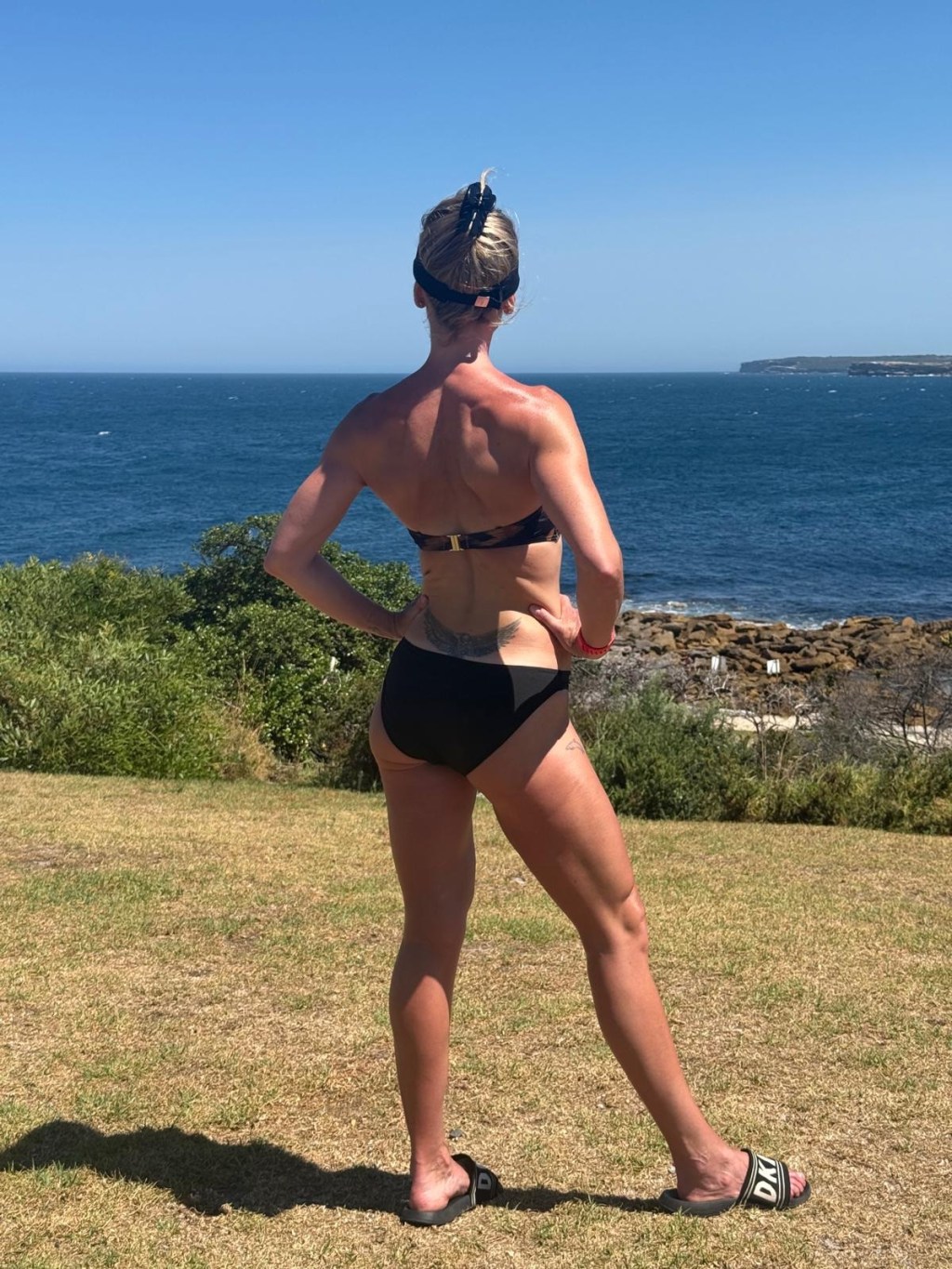
Alongside that, I’m now training as a bikini athlete. Weight lifting has always been part of my life — something I’ve loved instinctively — but for years I carried a quiet sense of being an imposter. That’s changed. I’m training with intention now, with purpose and serious ambition.
And I’m opening a wellness business. That part is terrifying — there’s no pretending otherwise. But it also feels unmistakably right. It feels like an expression of everything I value: healing, recovery, strength, and community.
Sharing these goals isn’t about performance or pressure. It’s about connection. If you’re writing something meaningful, training with intent, or building something from the heart in the wellness space, I’d love to connect — because choosing yourself is easier when you realise you’re not the only one doing it.
⸻
Beginning again
This is me, finding my way back. With clarity. With purpose. With hope.
Today, I feel ready — or at least ready enough to tell you…
I’ve had five miscarriages.
The first one happened when I was very young, and I’m not ready to talk about that one yet.
I found it hard to conceive all three of my children, but thankfully, they are all perfectly healthy.
The Second Loss — My Early Thirties
As far as I know, my next miscarriage happened in my early thirties, when we were trying for our third child. I desperately wanted a third. Deep down I knew she would be a girl, and I even had a name ready for her.
I didn’t even know I was pregnant until I knew I was miscarrying.
The doctor sent me straight to the hospital, but the scans showed it was already over. It was early. My blood levels were monitored for a few weeks until the hormones returned to normal.
It was sad, but I told myself it wasn’t meant to be.
I still had hope.
The Third — The One That Broke Me
A year later, still trying. Still hoping.
When I finally saw that positive test, I could barely breathe with excitement.
It had taken almost two years to get here.
I was six weeks pregnant when the doctor confirmed it. Two days before I hit eight weeks, I noticed some spotting. It was a Saturday night in late November, just after we’d watched the Christmas lights switch on in town.
By Sunday, the spotting turned to blood. I spent the day in anxious terror, trying to convince myself it was nothing. But by that night, I knew.
The next morning, I called the doctor. He booked me in for a scan on Wednesday — two days away. But later that same morning, I began to cramp so badly that I could barely move. As I sat on the toilet, I passed the tiny fetus. I caught it in a tissue and kept it, not knowing what to do.
I lay on the sofa the rest of the day, crying silently. My eldest was at school, my youngest at preschool. When they came home, I cuddled them on the sofa and held on tight. They helped me through that day more than they will ever know.
The hospital confirmed the miscarriage. My pregnancy hormones stayed high for weeks, which meant blood tests and repeat scans all through Christmas. My body wouldn’t let go. It took nearly two months before everything returned to normal.
No one knew. Because no one had known I was pregnant.
I carried it alone.
The Fourth — The One I Faced Numb
Six months later, I was pregnant again.
I was 33, terrified, and cautious. I tested obsessively, watching the weeks tick up.
But once again, at almost eight weeks, it happened — the same way, the same time.
This time I didn’t cry. I sat on the toilet one sunny summer afternoon, passed the fetus, flushed it, and ten minutes later went to pick up the kids from school.
I refused to break this time.
I numbed myself instead — went out, partied, pretended I was fine.
No one knew. Again.
The One That Stuck
By the time I turned 34, we decided to give it one last try. Just before our self-imposed deadline, I fell pregnant again. This time, I got full NHS support — weekly scans because of my history.
At six weeks, we saw a fetus.
At seven, we saw a heart beat.
At eight, still strong.
Week by week, I dared to believe.
And finally, that baby stuck.
At 35, I gave birth to a beautiful, healthy baby girl.
She was my miracle.
But life wasn’t done testing me yet.
When she was two, I got pregnant again — by accident.
I’d refused to go back on the pill; I wanted my body to balance naturally after breastfeeding. We weren’t trying. We didn’t want more children. We had no room, no plans for a fourth.
The irony wasn’t lost on me.
It had taken years of heartbreak to get pregnant when I wanted to… and now, when I didn’t, it happened easily.
We talked about abortion, but I couldn’t go through with it.
Even though I didn’t want this baby, I couldn’t help but love it.
A few weeks later, the decision was made for me.
The Fifth – The One That Nearly Killed Me
It started as a dull pain one Sunday afternoon — I thought it was trapped wind.
By 4am, I was in agony. Still, I wasn’t bleeding, so I convinced myself it was nothing serious.
By late Monday morning, I could barely move. My stomach was swelling, but when my husband called the doctor, they said to wait for my afternoon appointment. I couldn’t wait. He drove me to A&E before picking up our daughter from preschool.
I walked into A&E alone, hunched over, barely seeing straight.
I told them I thought it was ectopic.
They told me to take a seat.
Hours passed. When a nurse finally saw me, she told me to drink water — said I was probably dehydrated. I managed a urine sample and noticed it was dark brown. Later, I’d find out that was blood.
As I walked back from the toilet, my vision went black. I collapsed on the floor.
Finally, they realised how serious it was.
I was scanned immediately.
The room went silent.
It was ectopic — my left fallopian tube had ruptured. I was bleeding internally.
By the time they operated, I had lost so much blood that I needed three transfusions.
They told me afterwards I was only hours from death.
I woke up in shock, with scars across my stomach and one fallopian tube gone.
I had been in pain for sixteen hours without pain relief, waiting alone, nearly dying in a hospital corridor.
When I finally came home, I made my husband get the snip. He didn’t want to, but I insisted. I had nearly died. Enough was enough.
Aftermath
It took months to recover physically, and much longer to recover mentally.
Miscarriage changes you. Each one chips away at your innocence, your belief in safety, your trust in your own body.
For years, I carried all of this silently.
I thought because I had children I didn’t deserve to grieve my miscarriages.
Now, I’m ready to say it out loud.
Because silence might protect us in the moment, but truth — even painful truth — is what sets us free.
To Anyone Who’s Been Here
You’re not alone.
You’re not broken.
You’re still here — and that’s strength.
For years, I thought strength meant staying silent.
Now I know strength is telling the truth, even when your voice shakes.
If you’ve been through this too, I see you.
If this is you, please know you don’t have to carry it in silence. There is no shame in your story. You have survived more than most will ever understand.
What it’s really like living with a partner who has depression and alcohol addiction. My honest story, what I’ve learned, and advice if your spouse refuses help.
When Depression and Alcohol Collide
Over the last year, I’ve watched my husband slip further into depression and alcohol addiction. He’s 48, has worked for the same company for 25 years, and ever since a takeover 18 months ago, he’s felt like his world is collapsing. He often says that losing his job would feel like losing his life.
But here’s the truth: his depression and drinking don’t just affect him. They affect me, our children, our marriage, and the whole atmosphere of our home. When one person is drowning in alcohol and despair, it can feel like the whole family is being pulled under.
The Shift After Sobriety
For nearly three decades, we’ve built a life together. But everything changed when I decided to get sober. Sobriety gave me clarity, energy, and a desire to live differently — to put my health and peace first. Instead of moving forward together, we began drifting apart.
While I was rebuilding, he was self-destructing. His drinking escalated from social to solitary. Nights of heavy alcohol became routine. Bottles replaced conversations. He often drinks alone, sometimes late into the night, and the hangovers spill into the next day. Depression and alcohol addiction feed off each other, creating a cycle that feels impossible to break.
The Daily Reality of Living With an Alcoholic Spouse
Living with a partner who struggles with both depression and alcohol addiction is exhausting. The man who once laughed with me, planned our future, and cared about our family now often lashes out in anger or withdraws completely.
Alcohol has made him cruel with his words. He is impossible to talk to. He refuses to see a doctor. He does nothing to look after his health. And no matter how much I want to help, I can’t make him want to change.
The hardest part is watching him give up on himself — drowning in drink while refusing a lifeline.
What I’ve Learned About Coping With a Depressed, Alcohol-Dependent Partner
After nearly 28 years together, I’ve had to face some difficult truths. If you’re living with a spouse struggling with alcohol and depression, maybe these lessons will help you too.
You can’t fix someone else. Love isn’t enough to cure depression or addiction. No matter how much you give, you cannot force someone to seek help, stop drinking, or choose health. That choice has to come from them. Alcohol changes everything. Drinking doesn’t just numb their pain — it damages the relationship. Conversations become arguments, trust erodes, and family life suffers. If your partner’s drinking is destroying your connection, it’s not your fault. Depression clouds the person you knew. It can make them distant, irritable, or cruel. Addiction fuels the same behaviours. Separating the illness from the person can help you see that the cruelty is not the full truth of who they are — but it doesn’t make it easier to live with. You must protect your own health. Living with someone who drinks heavily and refuses help will drain you completely. I’ve learned that my sobriety, health, and stability matter too. Boundaries aren’t selfish — they’re necessary. Hard choices are sometimes necessary. We’ve discussed divorce. After nearly three decades, that thought is heartbreaking. But I’ve had to accept that love alone cannot save a marriage if one person refuses to save themselves.
How Alcohol and Depression Impact Family Life
Addiction doesn’t just live inside the person who drinks. It leaks into every corner of family life. The atmosphere at home is heavy. The children see more than we realise. I feel the constant pressure of carrying everything on my shoulders: the house, the kids, the finances, and the emotional load.
It’s not just his battle. It’s mine too. But I’ve had to learn — it’s not my responsibility to heal him.
Coping Strategies That Have Helped Me
I’m not a therapist. I’m just a wife trying to survive a marriage weighed down by depression and alcohol addiction. But here are a few things that have kept me going:
Sobriety first. Staying sober has been my anchor. It gives me the strength to face reality and protect myself.
Routine and health. Exercise, proper sleep, and eating well help me stay resilient when everything else feels chaotic.
Support systems. Talking openly with friends, or writing blogs like this, stops me feeling so alone.
Perspective. Remembering that depression and addiction are illnesses helps me separate the man I married from the illness he’s carrying.
When Love Isn’t Enough
We’ve been together nearly 28 years, and sometimes I still hope things will turn around. But hope doesn’t change reality. Living with a partner who battles both depression and alcohol addiction is one of the hardest things anyone can face.
I’m learning that I can’t let his choices destroy me. I have to value my own health, my peace, and my future. And if that means making painful decisions, then I’ll face them — because I deserve to live too.
Final Thoughts
If you’re living with a depressed or alcoholic spouse, please know this: you are not alone. You’re not weak for feeling exhausted. And you’re not failing because you can’t pull them out of it. Depression is an illness. Alcohol addiction is an illness. You can’t cure either by loving harder.
The best thing you can do — the only thing you can do — is look after yourself. Protect your health, your peace, and your future.
💬 I’d love to hear from you. Have you ever lived with a partner who struggled with depression or alcohol addiction? How did it affect you — and what did you learn about yourself along the way?
In my second year sober I went from running my first half marathon to completing a 200-hour yoga teacher training — but I also faced some of the hardest battles of my life. From marriage struggles and a shocking health scare, to perimenopause, colitis, and learning to finally walk away from alcohol for good. This is the story of how I almost broke, and how I found the strength to rise again.
My First Soberversary
My first sober-versary was on 14 May 2022. I was so proud of myself. I’d been tracking days on my sobriety app and each milestone — 30, 90, 365 days — felt like living in a parallel universe. I loved it. I’d always weight trained and practised yoga, but without alcohol I finally made real progress. I’d also started running outside: just 5K, three times a week, and I got surprisingly fast.
Running My First Half Marathon
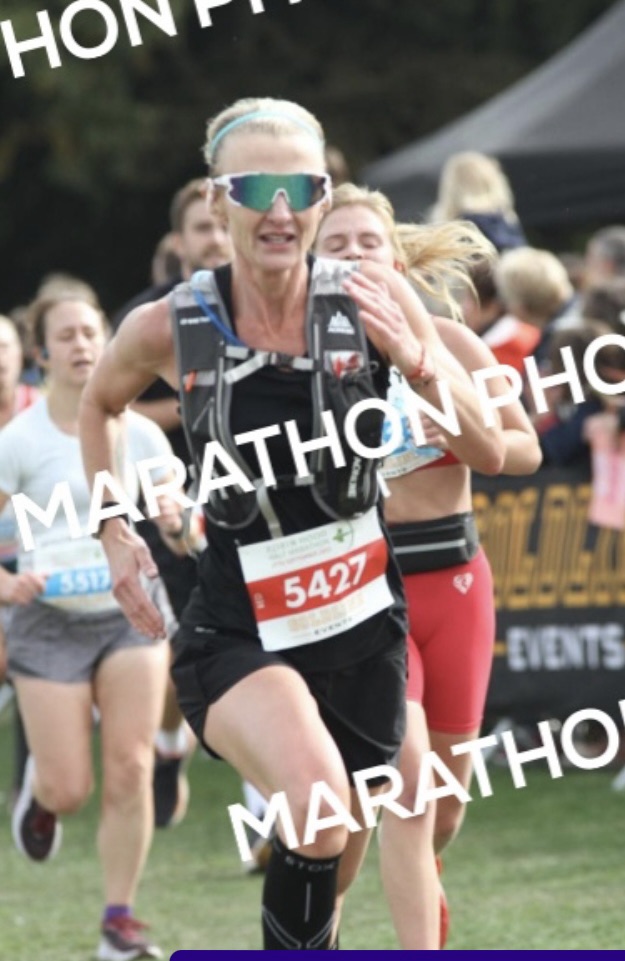
In my second sober year I did something I’d never done before — I ran a half marathon. I signed up only eight weeks before the race on 25 September 2022. With minimal training and never having run further than 5K, the distances were brutal. My goal was sub-1:50 but the hills got me and I finished in 1:55. Still — an amazing result for my first half at 43.
A Dream Come True: Yoga Teacher Training
Not long after, I went on to complete another dream: a 200-hour yoga teacher training. Throwing myself into the practice gave me a new depth of strength, discipline, and self-belief. For the first time in my life I wasn’t just dabbling in health and fitness — I was living it fully.
Marriage on the Rocks
But life wasn’t all wins. My marriage was really suffering. Without the booze and partying, we discovered there wasn’t much holding us together; we’d become polar opposites living almost separate lives. On Christmas Day 2022 we had an argument so bad I spent the rest of the day in my room and missed Christmas dinner with the kids. That was a wake-up call.
The Secret I Kept About My Health
I’d also been carrying a secret. A few years earlier, around 36, I’d been diagnosed with IBS. Before COVID hit I was often passing blood; I was referred to the hospital but appointments were delayed during the pandemic. The bleeding was worse when I drank, so quitting felt like the right thing to do — and it helped. But milder symptoms lingered and gradually worsened despite being alcohol-free and healthier.
Facing the Fear: Urgent Tests
In August 2023, on holiday in the south of France in my second year sober, my back was sore and stiff. My tummy felt a little better whilst we were away, so I blamed life stress and figure I just needed a break. Then I woke up on 1 October 2023 feeling very unwell. My symptoms were severe. I called the GP and was seen straight away — tests came back worrying, suggesting I could have bowel cancer. I was put on the NHS urgent pathway, which meant I’d be in hospital within 14 days. I was terrified.
The colonoscopy prep was horrendous — like severe food poisoning — and the procedure itself was worse. Despite a double dose of fentanyl I felt agony while the surgeon tried to pass the scope around my bowel; they had to stop. Apparently my bowel shape made it difficult. He saw the first half and took several biopsies. The result was inconclusive because they hadn’t seen it all, but inflammatory bowel disease was diagnosed — they couldn’t say Crohn’s or ulcerative colitis. No cancer. What a relief.
When My Body Broke Down Again
I started medication immediately and, after a few weeks, felt much better. Then, one Saturday night, I woke with sudden, shooting agony in my shoulder. I could hardly move my head; my arm felt dead and on fire. I waited until Monday to see the doctor but was told to go to A&E. I waited twelve hours. A spinal surgeon said I’d herniated a disc in my neck and needed an MRI — not urgent enough to do in A&E — and I was sent home with nerve blockers. The private MRI through work a couple of weeks later showed a fully herniated C6/7 compressing the nerve to my arm and fingers. I was on intense pain and nerve medication and was told only time and physiotherapy would help. By Christmas it eased and over the following twelve months the strength returned — a long, slow recovery.
Seeking Peace in Goa
Feeling like I was losing my mind under all this, I booked a solo yoga retreat in Goa for April 2024. Leading up to it the marriage was awful. Blood tests over months showed very low oestrogen — I was in perimenopause — and I started HRT patches while in Goa. The trip was a mixture of pride and anxiety: I was proud to have travelled alone but being on my own felt strange, and my anxiety was intense. I missed my kids.
After I returned I had another colonoscopy — this time under general anaesthetic. The doctors found severe colitis, Mayo level 3 — the worst.
Backsliding into Old Habits
Feeling defeated, just two weeks before my third soberversity, I drank. I dressed up, went to a fancy restaurant with my husband and for that night I felt like the old me was back. But the relief didn’t last. My bowel issues worsened, and I started drinking monthly blow-out nights.
Finding Clues in Food and Hormones
Medications — immunosuppressant suppositories and oral drugs — didn’t control it. I did a food sensitivity test which showed I was highly sensitive to many staples: white rice, white pasta, some vegetables. I cut out the worst offenders for eight weeks, lost too much weight, but my symptoms improved. I still avoid those foods even now and have found better alternatives. The hospital told me diet had nothing to do with my condition — I disagree, but that’s another story.
Breaking My Own Rules
I hated myself for drinking. The binge nights felt amazing at the time, but the following days were awful. After months of this cycle I vowed to stop — but I couldn’t. We had a dream family holiday to Costa Rica for Christmas 2024. Just before we left I had a DUTCH test, a detailed hormone profile. I’d already stopped HRT because it hadn’t helped. The results came the day before we flew: all my hormones were severely out of range. Finally I had proof of why I felt so rotten; I wasn’t going mad — my body was deeply unbalanced. I was now armed with a plan of action to fix them but it would take some time and effort.
I drank twice in December before we left and twice on holiday. I’d broken my “once a month” rule and felt utterly miserable. The trip was enjoyable in parts, but I wasn’t myself and it nearly ruined the holiday for the family.
The Birthday Breakdown
Back home, I decided enough was enough. I began my plan to fix myself and started to feel a bit better. My birthday was in February and we’d booked an afternoon meal. We’d agreed not to drink — but on the day my husband ordered a pint and a cocktail as soon as we sat down. I couldn’t sit there and watch him get drunk on my birthday, so I ordered the same. We got mildly drunk. I woke up the next morning feeling wrecked and spent the whole half term week feeling suicidal.
Finally, Real Healing
I doubled down on fixing my hormones and my bowels, and I knew drinking wasn’t helping. I stopped drinking again and managed three months alcohol-free. During that time I felt a real shift. I began to heal. I felt more balanced and my bowel issues stopped completely — a miracle. I felt the best I’d ever felt.
One Last Slip
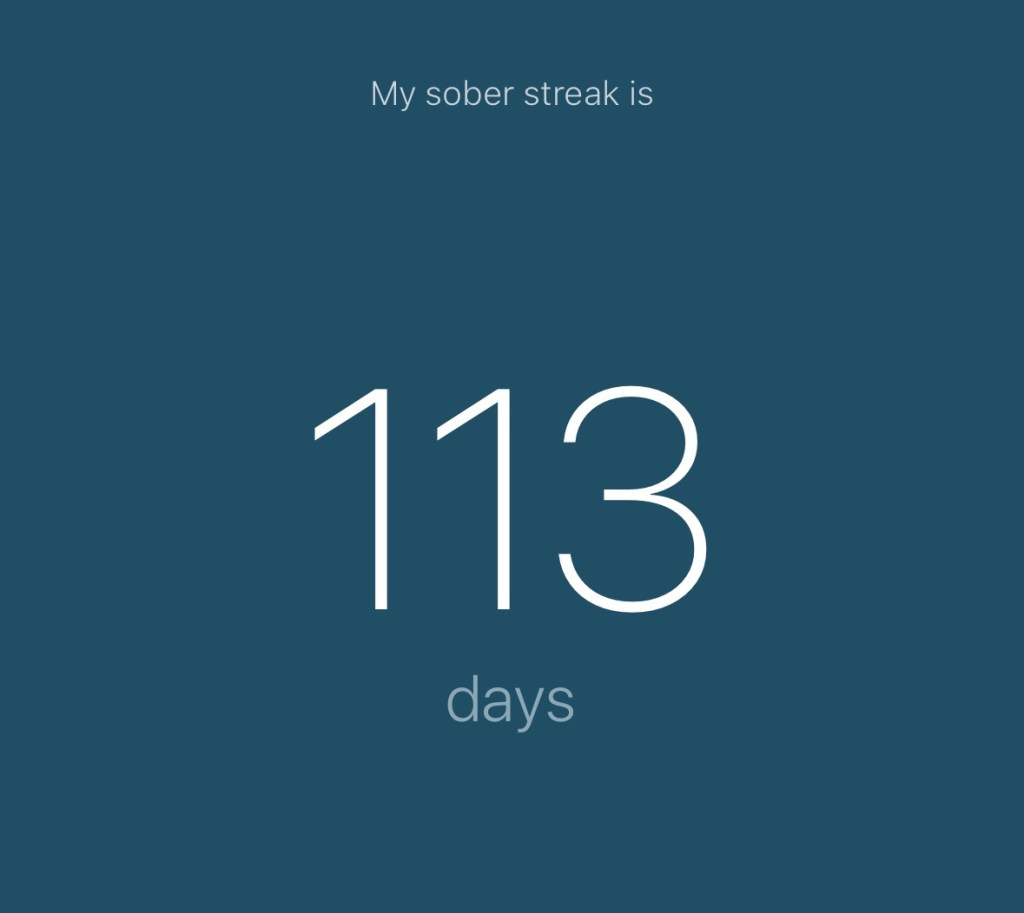
Then a friend in crisis hit me hard and I struggled to cope. On 31 May 2025, at twelve weeks sober, I hit the “fuck it” button. The next day I hated myself and vowed never again. That was 113 days ago. I will never drink again.
I had two hypnotherapy sessions that helped immensely. I started writing my memoir and posting on Instagram; more recently I began this blog. Writing is therapy. I honestly feel the best I have ever felt. I’m training and eating like an athlete.
Just before my Goa trip my husband told me I would never be an athlete and asked why I acted like one. His words shattered me — it had been a long-held dream but I gave up there and then, believing I was not good enough, yet again.
But now I’m here to prove it’s never too late. I will be everything I dreamed of.
At 39, I hit rock bottom with alcohol. This is the story of the day I finally woke up — and how it began my journey toward sobriety and self-worth.
It was the height of summer the day everything changed.
It was the fourth weekend in a row that I’d gone out and gotten utterly wasted. The three weekends before had all been all-nighters, fuelled by booze and chemicals, but my body was no longer recovering in between. I felt permanently hungover, permanently broken.
That fourth weekend, I went out early and drank so heavily that I blacked out. I couldn’t remember getting home. What I do remember is my kids. They were still up when I stumbled back, and they saw the disgusting state I was in. That image — their eyes on me, confused and disappointed — is one I will never forget.
The next morning was 3rd August 2019. I woke up feeling beyond disgusting, heavy with shame and sickness. A voice played on loop in my head: “One Year No Beer.” I’d seen the phrase on a Facebook page before, and now it wouldn’t leave me alone. It followed me through the day as I plastered on a brave face and took the kids to the fair. I tried to drown it out with two pints just to feel normal again. But deep down, I knew something had shifted.
That was the beginning of my sober curiosity. For the first time, I wanted to be alcohol-free for my 40th birthday in February. I knew I couldn’t carry on like this. So I set myself the smallest goal I could manage: one month without drinking.
The First Attempts
Those first weeks were hard, confusing, and shaky. I was two weeks in when I had to attend the funeral of a good family friend. It was packed with people I had grown up with, partied with — people I associated with drinking. I drove there on purpose, hoping it would stop me, but temptation was everywhere. I gave in to a bottle of beer. Then another.
It felt wrong. I was driving, so I stopped there, but when I got home, I caved completely and carried on drinking. The next morning, I was furious with myself. Why couldn’t I do this?
I tried again. This time, I managed nearly a month alcohol-free. But then came our wedding anniversary. We had a meal and theatre tickets booked. I promised myself I wouldn’t drink. But as soon as we sat down at the restaurant, we ordered champagne. At the theatre, I had two double vodkas. That was all — but it was enough. I woke up the next day feeling like death, defeated again.
Sober October
I decided I needed accountability, so I signed up for Sober October. I even got sponsors so I couldn’t back out. For the first time, I made it the whole month alcohol-free.
But the very next day, 1st November, I went out, got smashed, and pulled another all-nighter. I was straight back to square one. That relapse crushed me. I told myself I couldn’t do it, that I would never change. I gave up trying.
I spent my 40th birthday drunk and messy as ever. Smiling on the outside, hating myself on the inside.
Then Came Lockdown
When Covid hit, everything changed again. Suddenly we were at home, every day. There were no rules anymore, no weekend boundaries. We could drink whenever we wanted — so we did.
But homeschooling the kids, working, and drinking like that wasn’t sustainable. I hit my limit. Something in me was desperate for another chance.
On 1st June 2020, I signed up for the 28-day One Year No Beer challenge. I thought, just 28 days. I made it through — and then I extended it to 90 days.
During that third month, we hiked Mount Snowdon as a family. I will never forget standing at the peak, completely sober, feeling like a hero. Life looked shiny and new. I was experiencing things I never thought possible without alcohol. I felt alive. And for the first time, I truly believed I never wanted to go back.
The Slip
But addiction doesn’t give up easily.
In November 2020, after over five months sober, I slipped. It was horrific. One night of drinking after so long felt like a bomb going off inside me. I spiralled. In December, I planned a secret party at home. It went on until 6am. The shame afterwards was crushing.
From there, I mostly stayed sober, with a couple more big slips over the next few months. Each one broke me a little more, but also taught me something new about myself and about this fight.
Finally, on 14th May 2021, I partied all night for the last time. That was the night I admitted to myself that I was lying, pretending, hurting. I was done.
I then went on to stay sober for almost three years. For a long time, I thought the battle was finally over. But as I would later learn… sobriety is never a straight line…
Read part 2 next week…
⸻
Closing Reflection
When I look back on that messy, painful chapter of my life, one thing is clear: change doesn’t happen in one neat moment. It’s not one decision, one slip, one victory. It’s messy. It’s failure after failure, until something inside you shifts and you refuse to give up.
For me, 3rd August 2019 was the day I finally woke up. It wasn’t the day I got sober forever — but it was the day I stopped sleepwalking through my life and started fighting for something better.
And maybe that’s all any of us can do: wake up, and begin.
When I quit drinking, I thought everything would fall neatly into place. That my health would bounce back, my self-respect would grow, and my marriage would somehow repair itself along the way.
The health part is true. The clarity, the mornings without shame, the deep breath of finally living without alcohol running my life — that’s all real.
But the marriage part? That’s a different story.
Before Sobriety
For years, alcohol was the glue that held my marriage together. Not in a healthy way — more like duct tape over a crack in the wall. Nights out, wine at home, weekends fuelled by drinking. That was how we connected right from day one and I’m certain it kept us together when we became parents, too. Having three kids put a huge strain on our relationship.
Alcohol blurred the edges of our arguments. It gave us the illusion of fun, even when underneath there were problems neither of us wanted to face.
When I was drinking, we had things “in common.” Bars, parties, social circles, the ritual of pouring drinks at the end of the day. It made us feel close, but really, it was a false closeness.
Early Sobriety
When I quit, the cracks started to show. Suddenly, all the noise and distraction was gone, and what was left was just… us.
And the truth was hard: without booze, we had nothing in common.
The arguments didn’t get blurred anymore. They were raw, sharp, unavoidable.
The evenings weren’t filled with wine and laughter — they were quiet, sometimes awkward, sometimes cold.
The social life we’d built around drinking disappeared, and so did a big part of our connection.
Instead of fixing things, sobriety exposed everything.
Growing Apart
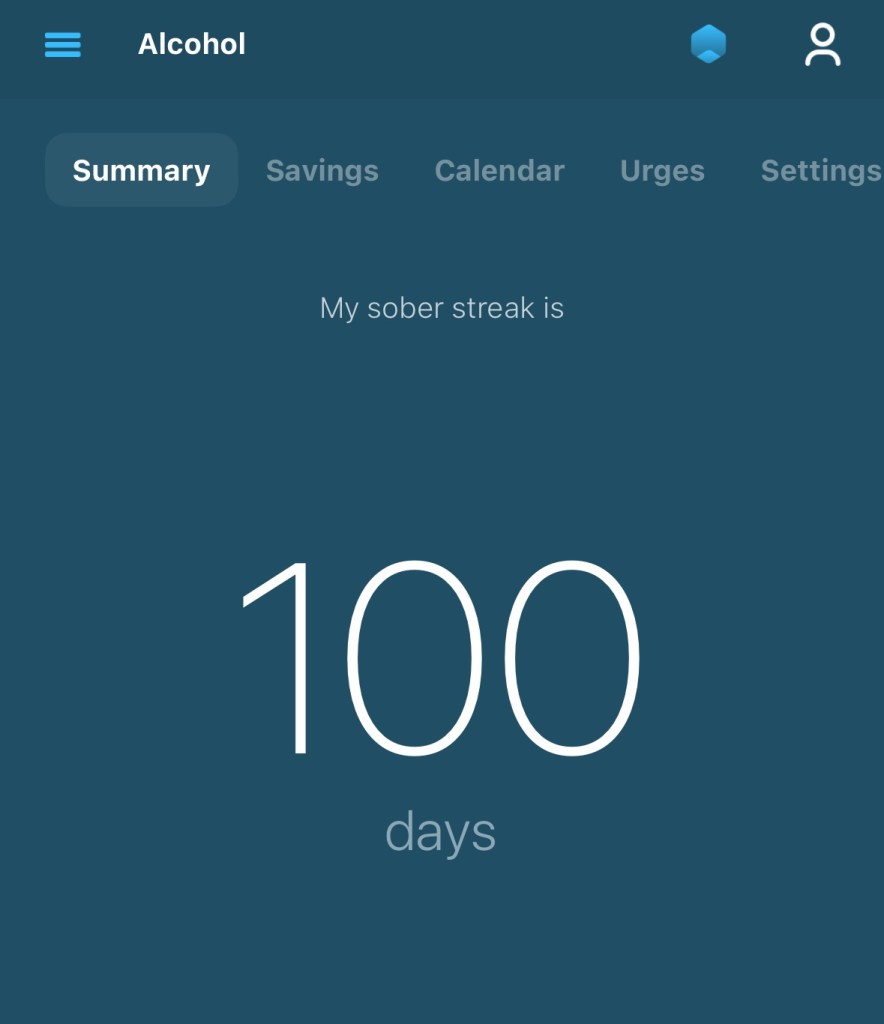
I’m 100 days sober today. And my marriage is struggling. We don’t get along. We feel like strangers who share a house.
That’s hard to admit, but it’s true.
It’s not that sobriety ruined my marriage. Sobriety just revealed it for what it is. Alcohol was the mask — and when I took it off, I saw the reality.
The uncomfortable truth? We’ve grown apart.
I don’t want to drink anymore. I don’t want the old life. But he’s still there, and we don’t share the same values or vision for the future.
Why This Time Feels Different
This isn’t my first attempt at sobriety. I’ve been on and off the sober train since I was 39. I’ve probably tried twenty times. The longest I made it was almost three years.
But this time feels different.
I’m 45 now. This time, I’m not bargaining with myself. I’m not quitting for a week or a month or a challenge. I’m quitting because I can finally see clearly: alcohol adds nothing to my life. It only takes.
There’s no going back. I know that in my bones.
What Sobriety Is Teaching Me
Sobriety is showing me that:
Not every relationship survives this journey. Sometimes alcohol was the only thing two people had in common. You can outgrow the version of yourself that fit a relationship.
It’s painful. It’s lonely. And it’s real.
But it’s also freeing. Sobriety is teaching me that I don’t need to shrink myself to keep the peace. I don’t need to pour a drink to make things feel easier. I can stand in my truth — even when it shakes the ground beneath me. I feel the best I’ve ever felt in my entire life. I finally feel like I’m truly and authentically the real me. I’ve never known who I am, but now I’m getting to know myself and I’m proud of myself. Even though I’ve made many mistakes and bad choices I believe they all taught me valuable lessons and made me the person I am today. I’m grateful for that. I want to share my story to help and encourage others who may have experienced similar things.
For Anyone Reading This
If you’re worried about what sobriety will do to your relationship, I won’t sugarcoat it. It might get harder. It might expose things you’ve both been hiding from. It might change everything.
But here’s the thing: sobriety doesn’t break what’s real. It only removes the illusion.
If a relationship is strong, it will adapt and grow. If it’s fragile, sobriety will show you the cracks.
And as painful as that is, it’s better than living a lie.
Where I Stand Now
I don’t know what the future holds for my marriage. Maybe we’ll find a way forward. Maybe we won’t. But I know this: I’m not giving up on myself to keep pretending.
I’m 100 days sober. I’ve tried and failed more times than I can count. But this time, I know. There’s no going back. This is the real me.
Sobriety is mine. My marriage might not survive it — but I will.
For most of my life, I kept my struggles to myself. I thought if I pushed harder, smiled wider, and carried on regardless, I’d eventually feel better. But all that silence only made me feel smaller, lonelier, and more disconnected from who I really was.
At some point, I realised I didn’t want to keep living that way.
This blog is my space to change that — to tell the truth, to stop hiding, and to share openly about what it means to heal in midlife.
Here, I’ll be writing about:
Sobriety and starting over (more than once) Motherhood, identity, and all the messy in-betweens Fitness, strength, and pushing my limits The courage it takes to dare to be different
I don’t know exactly where this journey will lead. But I do know that healing is not meant to be silent. Healing is loud, messy, imperfect, and brave.
So this is where I’ll share mine — not polished or filtered, but real. And maybe, in doing so, I’ll remind you that you’re not alone in yours.